If you are searching for nursing assistant jobs in USA for foreigners with visa sponsorship, you are looking at one of the most practical entry routes into the American healthcare workforce. Nursing assistants are part of the frontline care system in the United States. They help patients with daily living tasks, support nurses, and work heavily in nursing homes, hospitals, assisted living communities, and home health settings. The role is in constant demand because the U.S. healthcare system needs a large care workforce, especially for older adults and long-term care patients. The U.S. Bureau of Labor Statistics says nursing assistants help patients with daily living activities such as eating and bathing, and projects about 211,800 openings each year for nursing assistants and orderlies over 2024 to 2034, largely from replacement needs.
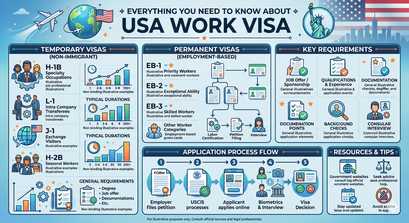
That demand makes the topic attractive for both job seekers and publishers. It also gives this keyword strong commercial value because it sits at the intersection of jobs, immigration, healthcare, training, and relocation. Those are advertiser-friendly topics that often attract high-intent searches. Still, one important truth needs to be clear from the start: when people say “visa sponsorship” for nursing assistant jobs, they often imagine a quick H-1B work visa. In reality, for most nursing assistant roles, the more realistic employer-sponsored path is usually permanent employment sponsorship, commonly through the EB-3 other workers route, not the standard H-1B specialty occupation route. USCIS states that H-1B is for specialty occupations that generally require at least a bachelor’s degree in a specific specialty, while USCIS describes EB-3 “other workers” as jobs requiring less than 2 years of training or experience.
So yes, foreigners can get nursing assistant jobs in the USA with sponsorship, but the process is more technical than many job ads make it sound. It usually means a U.S. employer is willing to sponsor you for a permanent position, work through labor certification requirements, and continue the immigration process with USCIS. The U.S. Department of Labor explains that a permanent labor certification allows an employer to hire a foreign worker to work permanently in the United States, and that in most cases the employer must first obtain a certified labor certification before filing the immigration petition with USCIS.
What a nursing assistant does in the USA
A nursing assistant, often called a CNA or nurse aide, provides basic patient care. Duties usually include helping patients bathe, dress, eat, move safely, use the bathroom, and stay comfortable. Nursing assistants may also measure vital signs, observe patient condition, assist with turning or repositioning, make beds, and report changes to nurses. In the United States, these jobs are common in skilled nursing facilities, hospitals, assisted living settings, and home health services. BLS says nursing assistants provide basic care and help patients with activities of daily living, while orderlies transport patients and clean treatment areas.
This matters for foreign applicants because the role is hands-on, physically active, and closely regulated. It is not just about finding an employer. It is also about meeting training and competency standards. Federal long-term-care rules say a state-approved nurse aide training program must include at least 75 clock hours of training and at least 16 hours of supervised practical training. Federal rules also state that to complete the competency evaluation successfully, an individual must pass both the written or oral examination and the skills demonstration.
That means even if you have care experience outside the United States, you may still need to meet state-level training, testing, or registry requirements before you can legally work in certain nursing assistant roles. This is one of the biggest misunderstandings in the market. Foreign experience helps, but it does not automatically replace U.S. state requirements. Federal regulations also place successful candidates into the nurse aide registry after competency completion.
Can foreigners really get visa sponsorship for nursing assistant jobs?
Yes, but you need to understand what “sponsorship” really means. In many cases, it means a U.S. employer wants to hire you into a full-time, permanent, non-seasonal nursing assistant role and is willing to support the immigration process. USCIS says EB-3 “other workers” covers unskilled labor requiring less than 2 years of training or experience, and the U.S. State Department says these are positions requiring less than 2 years of training or experience and not temporary or seasonal. That fits many nursing assistant roles much more closely than H-1B does.
What most foreigners should know is this: CNA sponsorship is usually an employer-led permanent immigration strategy, not a casual work permit. The employer generally has to show the job is permanent, complete labor certification steps where required, and then file immigration paperwork. The DOL says permanent labor certification is designed to ensure foreign hiring does not adversely affect U.S. workers’ job opportunities, wages, and working conditions, and USCIS notes that the employer or potential employer generally needs to file a petition for someone coming to work permanently or temporarily.
This is also why many “visa sponsorship” ads are misleading. Some simply mean the employer is open to reviewing candidates who already have work authorization. Others may mean future sponsorship is possible, not guaranteed. A serious sponsorship opportunity is one where the employer understands the immigration path, has a permanent full-time need, and is prepared to document that need properly.
The most realistic visa path: EB-3 other worker sponsorship
For most foreign nursing assistant applicants, the most realistic path is the EB-3 other worker category. USCIS explains that the EB-3 category includes “other workers” for jobs requiring less than 2 years of training or experience. For many CNA and nurse aide roles, that description is a better fit than specialty occupation programs.
Why is this important? Because it changes how you search. Instead of typing only “H-1B CNA jobs,” which usually leads to poor results, smart applicants should search for terms like:
- EB-3 nursing assistant jobs USA
- CNA jobs with green card sponsorship
- nursing home jobs in USA with visa sponsorship
- healthcare assistant permanent sponsorship USA
- other worker visa jobs USA healthcare
This keyword shift improves both your job search and your SEO targeting. It aligns the content with how the system actually works.
Another key detail: the DOL reports current PERM processing times publicly, and as of the March 2026 reporting month, average analyst review time was listed at 501 calendar days, with audit review at 343 calendar days, while noting actual processing times vary by case. That means sponsorship is rarely fast. It is a long process, and any page on this topic should say that honestly.
Why H-1B usually is not the main route for nursing assistants
Many international job seekers assume every sponsored U.S. job uses H-1B. That is not how nursing assistant hiring usually works. USCIS says H-1B specialty occupations generally require at least a bachelor’s degree or higher in a specific specialty, and the Department of Labor similarly describes H-1B as requiring the theoretical and practical application of specialized knowledge and a bachelor’s degree or equivalent in a specific specialty. A standard nursing assistant job typically does not meet that threshold.
That does not mean nursing assistants are unimportant. It simply means the legal framework is different. Nursing assistants are essential healthcare support workers, but the occupation is not usually classified the same way as jobs that require a specific university degree for entry. So if you are a foreigner targeting this sector, you should not build your entire plan around H-1B expectations.
One nuance is worth mentioning. Some DOL workforce grant materials describe nursing assistants as part of “target H-1B healthcare occupations” in training initiatives. That does not mean a normal CNA role automatically qualifies for an H-1B visa petition. It simply reflects program language used for workforce development funding, not a blanket immigration approval rule. USCIS’s actual H-1B eligibility standard still centers on the specialty occupation requirement.
Does Schedule A help nursing assistants?
Usually, no. This is another area where people get confused because they hear that healthcare workers can be fast-tracked. USCIS materials say Schedule A Group I includes professional nurses and physical therapists, not nursing assistants. USCIS search results and policy materials consistently refer to Schedule A occupations as registered or professional nurses and physical therapists, alongside a separate exceptional ability group.
That means a nursing assistant job usually does not get the same Schedule A treatment as a registered nurse role. For content monetization and SEO, this distinction is powerful because many competing pages blur the line between RN sponsorship and CNA sponsorship. A better page wins trust by separating them clearly.
Salary for nursing assistants in the USA
Pay is one of the biggest reasons this keyword converts well. People searching it often want immediate answers: how much can I earn, and is it enough to justify relocation?
According to the U.S. Bureau of Labor Statistics, the median annual wage for nursing assistants was $39,530 in May 2024. BLS also reported an average hourly wage of $19.84 and noted that pay varies by industry.
Industry also matters. BLS reported that in May 2024, the highest-employment industries for nursing assistants included:
- Skilled nursing facilities: 492,050 jobs, mean hourly wage $19.54
- General medical and surgical hospitals: 425,740 jobs, mean hourly wage $20.25
- Continuing care retirement communities and assisted living facilities: 150,140 jobs, mean hourly wage $19.07
- Home health care services: 76,790 jobs, mean hourly wage $18.18
- Employment services: 57,740 jobs, mean hourly wage $22.49
For foreigners, this means the strongest opportunity clusters are often in long-term care, nursing homes, and hospital systems. If you want better odds, target employers with constant staffing needs rather than small clinics with occasional openings.
Job demand and market opportunity
Nursing assistant jobs are not just available; they are structurally important to the U.S. healthcare system. BLS says nursing assistants were part of one of the largest healthcare support workforces and that there are projected to be about 211,800 openings each year for nursing assistants and orderlies across 2024 to 2034. BLS also notes that nursing assistants had employment of nearly 1.4 million in May 2024, making them the third-largest healthcare occupation after home health and personal care aides and registered nurses.
This level of scale matters for sponsorship content because employers do not sponsor people for niche jobs only. They sponsor when there is a persistent labor need. Large, recurring care demand makes this field more viable than many small office roles. Still, demand alone does not guarantee sponsorship. An employer must be willing to invest time, legal effort, and money.
Basic requirements foreigners should expect
If you want certified nursing assistant jobs in USA for foreigners, expect a mix of employer requirements, state rules, and immigration requirements. The exact checklist varies by state and employer, but most serious candidates should prepare for the following:
You will usually need a secondary-school education or its equivalent, hands-on care experience or relevant healthcare exposure, the ability to communicate clearly in English, readiness for background screening, vaccination compliance where required, physical ability to assist patients safely, and willingness to complete state-approved training or competency testing if the employer or state requires it. Federal nurse aide rules require approved training standards and a successful written/oral plus skills evaluation for competency in covered settings.
Some employers prefer applicants who already have nurse aide experience in hospitals, elder care, rehabilitation, disability support, or home care. Others are more open to training candidates, especially in long-term care settings. But from a sponsorship perspective, employers are more likely to consider you if you already look “deployment-ready,” meaning you understand patient care basics, documentation culture, infection control, lifting safety, and resident dignity.
Step-by-step process to get sponsored
1. Target the right employers
Focus on employers with constant staffing demand: skilled nursing facilities, long-term care groups, assisted living operators, hospital systems, home health agencies, and healthcare staffing groups. BLS employment data show that skilled nursing facilities and general hospitals account for a large share of nursing assistant employment.
2. Understand the job title variations
Do not search only “nursing assistant.” Also search:
- CNA
- nurse aide
- patient care assistant
- healthcare assistant
- caregiver
- long-term care aide
- resident care assistant
Some employers use different titles even when the work is similar.
3. Build a U.S.-style healthcare resume
Your resume should highlight bedside support, mobility assistance, feeding, hygiene care, vital signs, documentation, infection prevention, teamwork, shift work, dementia care, fall prevention, and patient dignity. Use measurable language where possible.
4. Apply only to employers that clearly mention sponsorship or international candidates
Use precise filters such as “visa sponsorship,” “green card sponsorship,” “foreign applicants welcome,” or “international recruitment.” If the listing says “must already be authorized to work in the U.S.,” move on.
5. Ask the right question after shortlisting
Ask whether the employer sponsors for permanent employment and whether they have experience with EB-3 or other worker sponsorship. That question is much more useful than asking only, “Do you sponsor visas?”
6. Prepare for training or certification gaps
Because federal rules require state-approved training standards and competency evaluation in covered long-term-care settings, you may need to complete additional training or testing, even with prior experience abroad.
7. Follow the employer-led immigration process
The DOL says that in most cases the employer must obtain a certified labor certification before submitting the immigration petition to USCIS for permanent work sponsorship.
8. Be patient
This is not a two-week process. DOL’s own processing page shows long average PERM timelines, and immigrant visa processing also depends on visa availability and case specifics. The State Department advises applicants to check the Visa Bulletin for current availability.
Best places to search for nursing assistant sponsorship jobs
Your best strategy is to combine employer websites, major job boards, long-term care company career pages, and international healthcare recruitment firms. But the real edge comes from how you search.
Use search phrases like:
- nursing assistant jobs in USA for foreigners with visa sponsorship
- CNA jobs in USA with visa sponsorship
- EB-3 nursing home jobs USA
- healthcare assistant jobs USA green card sponsorship
- long-term care jobs USA foreign workers
- certified nurse aide international recruitment USA
This matters because many job listings are not tagged perfectly. A page optimized for both “nursing assistant” and “CNA” usually captures more traffic and aligns with how employers actually label openings.
How to tell if a sponsorship offer is real
A real sponsorship opportunity usually has these signs:
- the role is full-time and permanent
- the employer has a clear facility or health system identity
- the ad explains relocation or sponsorship openly
- the employer understands credentialing, onboarding, and immigration steps
- communication is professional and traceable
- no one asks you to pay large unofficial “visa processing” fees to a recruiter
Be careful with vague ads that promise instant U.S. jobs with guaranteed visas, especially if they ask for money early. Legitimate immigration processing has formal steps, employer paperwork, and documented timelines. DOL and USCIS both frame these processes as employer-led compliance systems, not casual shortcut programs.
Resume tips for foreign nursing assistant applicants
If your goal is to rank for terms like CNA jobs with visa sponsorship and also serve users well, your content should teach candidates how to position themselves.
A strong resume should show:
- patient care experience
- elder care exposure
- hospital or care home background
- bathing, feeding, repositioning, and toileting support
- vital signs assistance
- mobility and transfer assistance
- infection prevention and hygiene awareness
- teamwork with nurses and supervisors
- compassion, observation, and reporting ability
- shift flexibility
Do not make your resume sound generic. Make it sound employable. Employers sponsor workers who reduce risk.
Why this keyword is good for monetization
From an SEO and publishing angle, this is a strong pillar topic because it sits inside several high-value search ecosystems:
- employment
- immigration
- healthcare careers
- training and certification
- relocation and settlement
That allows you to naturally include commercial-intent subtopics such as:
- visa sponsorship agencies
- CNA training programs
- English tests or credential support
- relocation services
- interview coaching
- resume services
- immigration legal support
- healthcare job boards
You can also build internal links from this page to related high-intent articles like:
- How EB-3 visa jobs in the USA work
- Best healthcare jobs in the USA for foreigners
- CNA certification in the USA for international applicants
- Nursing home jobs in America with sponsorship
- Difference between CNA, caregiver, and home health aide in the USA
- How long employer sponsorship takes in the USA
That internal cluster strengthens topical authority.
Common mistakes foreign applicants make
The first mistake is applying only to H-1B-style job searches. For most nursing assistant roles, that is the wrong lane. USCIS’s H-1B standards center on bachelor’s-level specialty occupations, while EB-3 other worker rules are a more natural fit for positions requiring less than two years of training or experience.
The second mistake is confusing registered nurse sponsorship with nursing assistant sponsorship. Schedule A advantages generally apply to professional nurses and physical therapists, not standard nursing assistant jobs.
The third mistake is ignoring state training and competency requirements. Federal rules set a baseline for approved nurse aide training and competency evaluation in covered settings.
The fourth mistake is expecting speed. DOL’s current PERM processing data alone show this can be a long process.
The fifth mistake is trusting any recruiter who guarantees a visa without a credible employer process behind it.
Frequently asked questions
Can a foreigner work as a nursing assistant in the USA?
Yes, but usually through an employer-sponsored route tied to permanent work, not a simple short-term casual work arrangement. For many roles, the legal fit is closer to EB-3 other worker sponsorship than H-1B specialty occupation sponsorship.
Is H-1B available for CNA jobs?
Usually no, because H-1B is for specialty occupations that generally require at least a bachelor’s degree in a specific specialty. Standard CNA or nurse aide jobs generally do not fit that framework.
What is the average salary for a nursing assistant in the USA?
BLS reported a median annual wage of $39,530 for nursing assistants in May 2024 and an average hourly wage of $19.84, with pay varying by industry.
Which U.S. employers hire the most nursing assistants?
BLS data show the largest employers include skilled nursing facilities, general medical and surgical hospitals, assisted living and continuing care communities, home health care services, and employment services.
Do I need U.S. certification first?
Often, you will need to meet state-approved training and competency standards for covered nurse aide roles. Federal regulations require approved training programs and successful written/oral plus skills evaluation in those settings.
How long does sponsorship take?
It varies widely, but it is usually not fast. DOL’s published PERM processing times for March 2026 showed average analyst review at 501 days, and the agency notes actual times vary by case. Visa availability can also affect timing.
Final word
If you are serious about getting nursing assistant jobs in USA for foreigners with visa sponsorship, go in with the right mindset. This is a real opportunity, but it is not a shortcut. The strongest path is usually to target permanent, full-time healthcare employers that understand sponsorship, prepare for state training or testing requirements, and position yourself for the EB-3 other worker pathway rather than assuming H-1B will solve everything. Official U.S. sources support the core picture: nursing assistants are a major healthcare workforce, the occupation continues to generate large annual openings, employer sponsorship for permanent work generally runs through labor certification and petition steps, and H-1B is mainly built for degree-level specialty occupations.
That combination of steady demand, clear user intent, and commercial search behavior is exactly why this topic works well as a high-value pillar page. If you publish this article, pair it with supporting posts around EB-3 jobs, CNA certification, long-term care employers, and foreign healthcare recruitment. That is how you turn one good keyword into a full authority cluster.