If you are searching for roofer jobs in the USA, you are looking at a skilled trade with steady demand, practical entry routes, and real income potential. According to the U.S. Bureau of Labor Statistics, roofers held about 166,700 jobs in 2024, earned a median annual wage of $50,970, and the occupation is projected to grow 6% from 2024 to 2034, which is faster than the average for all occupations. BLS also projects about 12,700 openings per year over the decade, with many openings coming from replacement demand as workers retire or move into other occupations.
That combination matters for job seekers. It means roofing is not just a random manual labour job. It is a defined trade with measurable demand, an established apprenticeship path, and a wide range of niches, from residential roofing jobs and commercial roofing jobs to roof repair jobs, metal roofing jobs, and roofing foreman jobs. For people who want practical work, faster entry than many degree-based careers, and room to grow into supervision or self-employment, roofing remains one of the more direct ways to enter the U.S. construction labour market.
Another reason this keyword has strong search value is intent. People searching “roofer jobs in the USA” are often close to taking action. They are usually not just curious about the trade. They want to know how much roofers make, what qualifications are needed, where companies are hiring, whether apprenticeships are available, what safety rules apply, and whether foreigners can find roofing work in America. That makes this topic strong for both traffic and monetization, especially when the content also addresses related buyer-intent topics such as roofing safety gear, roofing training programs, roofing certifications, work boots, insurance, tools, and recruiting platforms. The federal data behind the trade also supports that strong intent because roofing is a recognized occupation with formal labour-market tracking, apprenticeship routes, and regulated safety requirements.
What roofers actually do in the USA
At the most basic level, roofers replace, repair, and install roofs on buildings. That sounds simple, but the work itself is broader than many people think. The BLS says roofers inspect roofs, measure materials, remove old roofing systems, replace damaged structures like joists or plywood, install insulation and ventilation, align roofing materials, and seal exposed fasteners to prevent leaks. In practice, that means a roofer needs to combine physical stamina with accuracy. Roofs are expensive building systems, so mistakes cost money fast.
Roofing work in the USA generally falls into two broad categories: low-slope roofing and steep-slope roofing. Low-slope roofs are common on commercial, industrial, and apartment buildings, while steep-slope roofs are typical on single-family homes. That distinction matters when you search for jobs because a company hiring for commercial roofing may want experience with membranes, insulation boards, bitumen systems, or thermoplastics, while a residential employer may focus more on shingles, metal panels, tile, slate, or shakes. If you want to target the right employers, you need to know which side of the market you fit into.
The trade is also evolving. BLS notes that roofers may work with green technology rooftop applications, including vegetative roofs, rainwater harvesting systems, and photovoltaic-related products such as solar shingles and solar tiles, even though dedicated solar PV installers often handle panel installation itself. That creates an important long-term angle for job seekers: roofers who understand newer materials, waterproofing systems, and energy-related rooftop applications can make themselves more valuable than candidates who only know one basic roof type.
Why roofer jobs in the USA are in demand
Roofs are not optional. Every home, warehouse, school, retail building, apartment complex, and industrial facility needs a functional roofing system. The BLS outlook reflects that basic economic reality. The occupation is projected to grow 6% from 2024 to 2034, and the government expects thousands of yearly openings even beyond pure growth because of worker turnover and retirement. In other words, roofing demand is not just about new buildings. It is also about maintenance, replacement, weather damage, aging structures, and labour replacement.
The structure of employment also shows where the opportunities are. BLS says the largest employers of roofers are roofing contractors, accounting for 73% of jobs, while 18% are self-employed and a smaller share work in building construction. That tells you something useful as a job seeker: most openings are likely to be with specialist roofing firms rather than general employers. So when you search online, you should not only type “construction jobs.” You should also target phrases like roofing contractors hiring, commercial roofing companies hiring, roof repair technician jobs, roofing crew jobs, shingle roofer jobs, metal roofer jobs, and roofing installer jobs.
Seasonality also affects hiring. BLS notes that many roofers work full time, but in northern states work may be limited during winter, while busy summer months can bring overtime. That means the roofing labour market is not flat all year. In many areas, hiring accelerates before and during peak work seasons. Anyone serious about finding roofing work should watch local demand cycles instead of applying randomly. Companies often recruit ahead of the months when jobs ramp up.
Types of roofer jobs in the USA
When people search for roofer jobs, they often imagine one generic role. In reality, there are several layers of opportunity. Entry-level roofer jobs usually involve assisting experienced workers, carrying materials, tear-off work, cleanup, tool handling, basic measurements, and safety compliance. These roles are ideal for candidates with little or no experience who want to learn on the job. Since BLS says roofers typically do not need a formal educational credential and often train through moderate-term on-the-job training, entry-level openings remain a realistic path into the field.
From there, many workers move into experienced roofer jobs where they install shingles, membranes, underlayment, flashing, sealants, and insulation systems with less supervision. Employers at this level usually want a worker who can read site instructions, measure roof areas, cut materials accurately, and maintain productivity without constant coaching. That is where job titles start to vary more: roofing technician, roofing installer, flat roofer, shingle roofer, metal roofer, commercial roofer, service roofer, roof repair specialist, and waterproofing technician are all common search variations. The underlying duties still connect back to the occupation profile described by BLS.
There are also commercial roofing jobs, which often involve low-slope systems on warehouses, apartment buildings, offices, retail sites, hospitals, and industrial structures. BLS specifically identifies low-slope roofs as common on commercial and industrial buildings, and that distinction matters because many commercial employers value experience with single-ply membranes, insulation boards, layered roofing systems, and waterproofing details. For job seekers, commercial roofing often signals larger projects, crew-based work, and employers that may provide more structured onboarding and safety systems.
On the residential side, residential roofing jobs usually focus on homes and smaller steep-slope projects. These employers often want speed, neat installation, and strong familiarity with shingles, tile, metal shingles, slate, or wood shakes. BLS notes that steep-slope roofs are typical on single-family homes, so candidates who enjoy varied locations and home-improvement style work may prefer this path. Residential jobs can also be attractive for workers who want to build toward self-employment later, since smaller roofing businesses often begin in the residential segment.
Above that level, there are roofing foreman jobs, roofing supervisor jobs, quality control roles, and eventually estimator, sales, or business owner paths. Roofing is one of those trades where field experience can convert into leadership if a worker becomes known for reliability, safety awareness, and productivity. Because the trade is highly crew-based, employers value people who can manage labour, keep projects moving, maintain standards, and reduce costly errors. The route is not automatic, but the occupation structure makes advancement possible without requiring a traditional four-year degree.
How much roofer jobs pay in the USA
Pay is one of the biggest reasons people search this topic, and the current federal numbers are solid. BLS reports that the median annual wage for roofers was $50,970 in May 2024, which equals about $24.51 per hour. The lowest 10% earned less than $37,060, while the highest 10% earned more than $80,780. That spread is important because it shows roofing has room for income growth. Beginners and low-skill workers may start at the lower end, but experienced roofers, crew leaders, and high-performing specialists can move much higher.
BLS also reports industry variation. In May 2024, the median wage for roofers working for roofing contractors was $50,680, while those in construction of buildings earned $49,350. That difference is not huge, but it reinforces the broader pattern that specialist roofing firms are the core market for this occupation. If you are comparing job offers, it is worth looking beyond just hourly pay and asking about overtime, per diem, travel work, tools, safety equipment, winter slowdowns, and advancement opportunities. A slightly lower hourly rate at a better-run company can still produce stronger annual earnings.
Apprenticeship earnings matter too. BLS notes that apprentices usually start at about 50% of what journey workers receive, with pay rising as they move forward in the program. For job seekers, that makes roofing apprenticeship a serious long-term option instead of just “cheap labour.” The wage progression matters because it gives beginners a structured way to turn no experience into a recognized skill path.
What qualifications you need for roofer jobs in the USA
One reason roofing attracts so many applicants is accessibility. BLS says there are typically no formal education requirements for roofers, and that most learn the trade on the job, although some enter through apprenticeship. The usual entry-level education category is no formal educational credential, and the occupation generally involves moderate-term on-the-job training. That makes roofing one of the clearer entry points into skilled trades for people who want income without waiting years for a formal qualification.
That does not mean the work is unskilled. BLS highlights several traits employers need: balance, manual dexterity, math skills, physical stamina, and physical strength. Roofers measure and calculate roof areas, handle heavy materials, and work on steep or elevated surfaces where precision matters. BLS specifically notes that bundles of shingles may weigh 60 pounds or more, which tells you the trade demands real physical readiness. Anyone applying for roofing jobs should present themselves as dependable, fit for outdoor work, and comfortable with heights and repetitive physical movement.
If you want a stronger route in, apprenticeship is worth serious attention. Apprenticeship.gov lists roofers among high-demand occupations in the construction industry, and the site says registered apprenticeship is a proven way for employers to recruit, train, and retain talent. In 2025, Apprenticeship.gov reports that the construction industry served 480,399 apprentices, up 28% over the past five years. That number is broader than roofing alone, but it confirms that apprenticeship remains a major pathway into the U.S. skilled trades ecosystem.
Safety matters more in roofing than in many other jobs
If you want roofer jobs in the USA, you also need to respect the safety reality. BLS says roofers have one of the highest rates of injuries and illnesses of all occupations, as well as one of the highest rates of occupational fatalities. Workers may slip or fall from ladders, scaffolds, or roofs, suffer burns from hot bitumen, or develop heat-related illness because roofs become extremely hot in summer. That is not a side issue. It is a core part of the profession. Serious applicants should expect employers to take safety training, protective equipment, and work procedures seriously.
OSHA’s construction fall-protection rules show how serious the risk is. OSHA states that, as a general matter, each worker on a walking or working surface 6 feet or more above a lower level must be protected by a guardrail system, safety net system, or personal fall arrest system, subject to specific rule-based exceptions. OSHA also gives separate details for low-slope roofs, steep roofs, and residential construction, including combinations of warning-line systems, safety monitoring systems, guardrails, and fall arrest systems depending on the work situation.
For low-slope roofing, OSHA says workers on roofs with unprotected edges 6 feet or more above lower levels must be protected through guardrails, safety nets, personal fall arrest systems, or approved combinations involving warning lines and safety monitoring. For steep roofs, OSHA says each worker must be protected by guardrails with toeboards, safety nets, or personal fall arrest systems. These rules are not theoretical. They affect hiring, training, productivity, and insurance. Employers want workers who follow procedure because one unsafe decision can shut down a job and create major liability.
Heat is another major issue. OSHA’s Heat Illness Prevention resources stress that employers and workers should address heat hazards proactively, encourage hydration, adjust workloads for new or returning workers, allow more frequent breaks during acclimatization, and respond fast when symptoms appear. OSHA’s case studies specifically note that new workers should be protected carefully during their first days or weeks in hot conditions, with plenty of rest breaks and fluids. In a trade like roofing, where workers spend hours on elevated surfaces under direct sun, a candidate who understands heat safety is more employable and more likely to stay in the field.
How to find roofer jobs in the USA
The smartest way to search is to stop using only broad phrases. “Roofer jobs in the USA” is good for research, but actual hiring often sits under narrower terms. Use location-plus-specialty searches such as commercial roofing jobs in Texas, flat roofer jobs in Florida, shingle roofer jobs in Ohio, roof repair technician jobs in Arizona, metal roofing installer jobs in North Carolina, or roofing foreman jobs in California. Since BLS shows that roofing contractors dominate employment, company-specific searches are usually stronger than generic job-board browsing.
Another good move is to divide your search by experience level. If you are new, search for entry-level roofer jobs, roofer helper jobs, roofing apprenticeship, roofing trainee jobs, and construction labourer roofing. If you already have field experience, search for service roofer jobs, commercial roofer jobs, TPO roofing jobs, EPDM roofing jobs, metal roofing jobs, slate roofing jobs, or roofing supervisor jobs. The more specific your search language, the better your results. That advice aligns with how the occupation itself is structured: residential, commercial, repair, replacement, membrane, steep-slope, and green-roof related work all sit under the same broad trade umbrella.
Apprenticeship search should be part of your strategy too. Apprenticeship.gov includes roofers among high-demand construction occupations and links job seekers to apprenticeship tools and partners. That matters because not every good roofing opportunity appears on a normal job board. Some of the best long-term opportunities come through employer-sponsored apprenticeship or trade-network channels rather than mass-application sites.
What employers look for in roofing candidates
Most roofing employers do not expect entry-level applicants to know everything. They do, however, expect work readiness. Because BLS describes the job as physically demanding and highly exposed to fall and heat risks, employers will usually prioritise candidates who show up on time, follow instructions, work safely, handle outdoor conditions, and do not quit after a few difficult days. Roofing companies lose money on unreliable hires. So in real hiring, consistency often beats raw confidence.
For experienced candidates, employers want proof that you can install, repair, measure, align, seal, and finish roofing systems properly. The BLS duty list gives a strong picture of what to emphasise: roof inspection, quantity calculation, tear-off, deck repair, vapor barriers, insulation, ventilation, waterproofing, leak prevention, and safe material handling. If your background covers any of these, say so clearly on your résumé and in interviews.
Safety awareness is also a hiring signal. A candidate who understands harnesses, guardrails, fall arrest, warning lines, ladder discipline, and heat precautions will usually be more attractive than someone who talks only about speed. In roofing, unsafe workers are expensive workers. OSHA’s rules and guidance make that obvious, and employers know it.
How to write a résumé for roofer jobs in the USA
A strong roofing résumé should be simple, direct, and job-focused. Start with your target title: Roofer, Commercial Roofer, Residential Roofer, Roofing Technician, or Roofing Foreman. Then use a short summary that positions you for the exact work you want. Mention years of experience, roof types, materials, crew size, safety awareness, and whether you have installation, repair, service, or supervisory background. Because BLS identifies low-slope and steep-slope roofing as key distinctions, it helps to mention which environment you know best.
In your work history, do not just write “worked on roofs.” Instead, describe outcomes. For example: installed asphalt shingle systems on steep-slope residential homes, completed tear-off and replacement projects, installed insulation and waterproofing layers on commercial roofs, performed leak diagnostics and repairs, or supervised crew compliance with fall-protection procedures. Those kinds of details map directly to the BLS description of the occupation and make your application easier for employers to trust.
If you are a beginner, lead with reliability, physical readiness, and training potential. Mention outdoor work, construction support, material handling, basic measuring, tool use, driver’s licence status if relevant, and willingness to learn through apprenticeship or on-the-job training. Since roofing does not usually require a formal credential to enter, beginners can still present a credible case if they emphasise attitude, stamina, and safety discipline.
Can foreigners get roofer jobs in the USA?
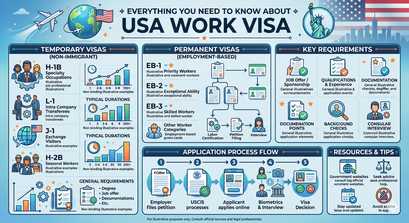
Yes, but the path depends on the employer and the type of need. For temporary non-agricultural labour, the U.S. Department of Labor says the H-2B program allows employers who meet program requirements to hire nonimmigrant workers for jobs based on a temporary need. DOL says that temporary need must be established under one of the recognized categories, and the employer must meet defined requirements as a U.S. business. That means foreign applicants should be careful: not every roofing job can sponsor, and not every employer is willing or eligible to use the program.
The cap matters too. USCIS says Congress sets the regular H-2B cap at 66,000 visas per fiscal year, split between the first and second halves of the fiscal year. USCIS also announced a temporary increase for FY 2026 for certain late-season needs, covering workers who begin employment between May 1 and September 30, 2026. For foreign job seekers, that means some seasonal or peak-demand roofing opportunities may exist, but sponsorship is time-sensitive, capped, and employer-driven rather than guaranteed.
So if you are applying from outside the U.S., search carefully. Use phrases like roofing jobs with visa sponsorship, seasonal roofing jobs USA, H-2B construction jobs, and temporary roofer jobs USA. Focus on legitimate employers, clear job descriptions, and transparent visa language. The safest assumption is this: visa-sponsored roofing jobs are possible, but they are narrower than ordinary domestic hiring.
Is roofing a good career in the USA?
For the right person, yes. Roofing is a good career if you want a trade with relatively low formal education barriers, measurable demand, a real wage path, and a chance to build skill quickly. BLS shows a solid national median wage, faster-than-average projected growth, and thousands of annual openings. Apprenticeship and on-the-job training create a direct entry route, while specialization can push earnings higher over time.
It is not a good fit for everyone. The work is physically hard, exposed to heat, elevation, and weather, and requires discipline around safety. BLS explicitly notes the physical demands and injury risk, while OSHA’s guidance makes clear that fall protection and heat precautions are central to safe roofing work. So the better question is not only “Does roofing pay?” It is also “Can I perform high-risk outdoor work consistently and responsibly?” If the answer is yes, roofing can become a stable trade path with long-term upside.
Final thoughts on roofer jobs in the USA
The reason roofer jobs in the USA remain a strong search and career topic is simple: this is essential work with consistent demand, a practical training path, and room for advancement. Federal labour data shows real opportunity, not hype. Roofers earned a median of $50,970 in 2024, the occupation is projected to grow 6% through 2034, and the country is expected to see 12,700 openings per year on average. That gives job seekers a solid foundation for action.
If you want to move fast, start by choosing your lane: entry-level, residential, commercial, repair, membrane, or foreman-track roofing. Then target specialist contractors, tailor your résumé, learn the safety basics, and consider apprenticeship where available. The strongest candidates in roofing are not always the loudest. They are the ones employers believe can work hard, learn quickly, stay safe, and finish jobs properly.
FAQ: Roofer jobs in the USA
Are roofer jobs in the USA in demand?
Yes. BLS projects 6% employment growth from 2024 to 2034 and about 12,700 openings each year on average.
How much do roofers make in the USA?
The median annual wage was $50,970 in May 2024, or about $24.51 per hour. The lowest 10% earned less than $37,060, and the highest 10% earned more than $80,780.
Do I need a degree to become a roofer?
Usually no. BLS says there are typically no formal education requirements, and many roofers learn through on-the-job training or apprenticeship.
What is the difference between residential and commercial roofing jobs?
Residential roofing usually focuses on steep-slope roofs on homes, while commercial roofing often involves low-slope roofs on larger buildings such as warehouses, offices, and apartment complexes.
Is roofing dangerous work?
It can be. BLS says roofers have among the highest rates of occupational injuries and fatalities, and OSHA requires fall protection in many roofing situations, especially when workers are 6 feet or more above lower levels.
Are apprenticeships available for roofing?
Yes. Apprenticeship.gov lists roofers among high-demand construction occupations and promotes registered apprenticeship as a way to recruit and train workers.
Can foreigners get roofing jobs in the USA?
Some can, especially through employer-driven temporary pathways like H-2B for qualifying temporary non-agricultural work, but sponsorship is limited, regulated, and cap-based.
What should I search online if I want better roofing job results?
Use narrower phrases such as commercial roofing jobs, roofer helper jobs, metal roofing jobs, roof repair technician jobs, flat roofer jobs, roofing apprenticeship, or roofing foreman jobs. Those align better with how the occupation is structured in the real market.