Civil engineering jobs in USA with visa sponsorship remain one of the more realistic pathways for foreign professionals who have technical degrees, project experience, and strong communication skills. The opportunity is real because civil engineering is a recognised professional field, the occupation typically requires at least a bachelor’s degree, and the U.S. labour market continues to show steady demand. According to the U.S. Bureau of Labor Statistics, civil engineers had a 2024 median annual wage of $99,590, employment is projected to grow 5% from 2024 to 2034, and the field is expected to produce about 23,600 openings per year on average. USCIS also states that H-1B specialty occupations include fields such as engineering, while employment-based categories such as EB-2 and EB-3 remain key permanent pathways for qualified professionals.
If your goal is to move beyond generic “USA jobs for foreigners” searches and focus on a practical, professional route, civil engineering is a strong niche. It combines commercial search intent with a real hiring market: employers need people who can design infrastructure, manage projects, analyse site conditions, support compliance, prepare cost estimates, and coordinate construction delivery. That means this topic naturally attracts high-intent searches such as H-1B civil engineer jobs, structural engineer jobs with visa sponsorship, transportation engineer USA sponsorship, green card sponsorship engineering jobs, and civil engineering salary USA.
Can foreigners get civil engineering jobs in the USA with visa sponsorship?
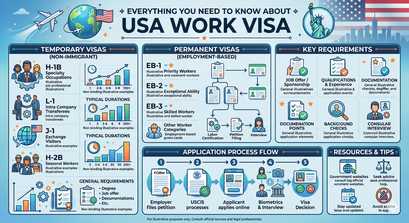
Yes, but the right answer is more precise than a simple yes. Foreign applicants can absolutely secure U.S. civil engineering roles with sponsorship, but sponsorship usually happens through one of a few defined immigration routes. For temporary work, the most visible route is the H-1B, which USCIS reserves for specialty occupations requiring specialised knowledge. For permanent residence, many engineers move through EB-2 or EB-3, often with a U.S. employer sponsoring the case. In addition, Canadian and Mexican citizens may have a TN option for engineer roles, Australian nationals may use E-3, and F-1 graduates in engineering may benefit from the 24-month STEM OPT extension while working toward longer-term sponsorship.
The important point is that “visa sponsorship” is not one single process. Employers usually choose the route based on your nationality, education, current immigration status, timing, and how urgently they need to fill the role. A civil engineer already in the U.S. on F-1 OPT may be easier to hire quickly than a candidate applying from overseas with no U.S. work authorisation at all. On the permanent side, USCIS explains that some immigrant categories require a permanent job offer from a U.S. employer, while the Department of Labor explains that the PERM system is designed to confirm that hiring a foreign worker will not adversely affect qualified U.S. workers’ wages and conditions.
Why civil engineering is one of the better U.S. job paths for foreign professionals
One reason civil engineering stands out is that it is not a vague “general business” field. It is a defined technical profession with clear job duties, recognised qualifications, and a measurable labour market. The BLS describes civil engineers as professionals who plan, design, and supervise the construction and maintenance of infrastructure projects such as roads, bridges, tunnels, buildings, and water and sewage systems. That clarity matters because U.S. employers and immigration processes both work better when the role is specialised and the degree requirement is obvious.
Another reason is labour-market durability. Civil engineering demand is tied to infrastructure, transportation, water systems, buildings, and public works. The BLS specifically notes that continued investment in U.S. infrastructure will require civil engineers to manage upgrades to bridges, roads, water systems, buildings, and related structures. In other words, this is not just a trendy digital niche that can disappear overnight. It is connected to long-cycle projects, public safety, construction delivery, and maintenance of essential systems.
The salary profile also helps. The BLS reports a $99,590 median annual wage for civil engineers in May 2024, with the lowest 10 percent earning less than $65,920 and the highest 10 percent earning more than $160,990. Median wages in some top industries were even higher, including $114,210 in the federal government and $108,790 in local government excluding education and hospitals. Those figures make the topic commercially valuable for publishers and practically attractive for job seekers at the same time.
The main visa sponsorship routes for civil engineers
1) H-1B civil engineer jobs in the USA
The H-1B route is the one most people know because it is designed for specialty occupations. USCIS says H-1B applies to people coming to perform services in a specialty occupation, and USCIS materials on H-1B cap season specifically note that specialty occupations may include engineering. For a civil engineer, that alignment is important because the occupation usually requires a bachelor’s degree or higher in a specialised discipline, which fits the logic of H-1B sponsorship well.
That said, not every engineering employer is equally easy to access through H-1B. Many private-sector H-1B filings are cap-subject and go through annual electronic registration. USCIS also notes that certain employers, including institutions of higher education, related or affiliated nonprofit entities, nonprofit research organisations, and government research organisations, are not subject to the numerical cap. For civil engineers, this matters because roles linked to universities, research units, or certain public-interest infrastructure settings may sometimes be easier to structure from an immigration perspective than purely commercial firms competing in the cap lottery.
2) EB-3 green card sponsorship for civil engineers
The EB-3 route is often highly relevant for civil engineering jobs because USCIS says the category covers skilled workers, professionals, and other workers, and the “professional” part typically fits positions that require at least a U.S. bachelor’s degree or foreign equivalent. Civil engineering roles often sit comfortably in that zone, especially when the employer has a permanent, full-time need and is willing to sponsor a long-term hire instead of only a temporary worker.
In most cases, this path involves PERM labour certification before the immigrant petition stage. The Department of Labor explains that the filing responsibility belongs to the employer, not the employee, and that DOL must certify that there are not sufficient U.S. workers who are able, willing, qualified, and available for the role in the area of intended employment. Once the labour certification is approved, the employer then moves to the USCIS stage. This is why job seekers should understand that “green card sponsorship” is not just an HR promise; it is a formal legal and procedural commitment with cost, timing, documentation, and recruitment requirements.
3) EB-2 for advanced degree civil engineers
USCIS says EB-2 may be available to members of the professions holding an advanced degree or its equivalent, as well as to certain persons of exceptional ability. That makes EB-2 especially relevant for foreign civil engineers who hold a master’s degree, significant specialist expertise, or senior technical profiles in areas like transportation systems, water infrastructure, structures, or complex project delivery.
USCIS also states that for EB-2, a job offer and labour certification are generally required, but that requirement can be waived in a National Interest Waiver case if the petitioner shows the waiver is justified. Not every civil engineer will qualify for NIW, and it should never be treated as automatic, but for professionals working on nationally important infrastructure, resilient water systems, large-scale transportation, or other public-value projects, it is a pathway worth understanding early rather than discovering too late.
4) TN for Canadians and Mexicans, E-3 for Australians
For some foreign applicants, the smartest route is not H-1B at all. USCIS policy guidance says engineers are among the professions that can qualify for TN status and notes that a baccalaureate degree or state/provincial licence is required for that classification. USCIS also states that E-3 applies only to nationals of Australia coming to perform services in a specialty occupation. If you fall into one of these nationality-specific categories, your immigration path may be more direct than the typical H-1B route.
5) STEM OPT for civil engineering graduates already in the U.S.
If you studied civil engineering in the United States, your first realistic bridge to sponsorship may be OPT and STEM OPT, not immediate employer-sponsored permanent residence. USCIS states that qualifying F-1 students in STEM fields may apply for a 24-month extension of post-completion OPT, and DHS’s STEM degree list includes the Engineering CIP series. For many employers, this creates a lower-risk hiring window: they can bring you in through OPT, evaluate your performance, and later decide whether to support H-1B or a green card process.
What kinds of civil engineering jobs in USA sponsor foreign workers?
The phrase “civil engineering jobs in USA with visa sponsorship” covers more than one niche. The BLS description of the profession shows why. Civil engineers work across transportation systems, hydraulic systems, structures, permitting, surveying oversight, material analysis, cost estimation, and project management. That means employers are not only hiring generic “civil engineers.” They may be hiring for very specific needs tied to project types, clients, and software environments.
In practice, the most sponsorship-friendly roles are usually the ones tied to clear technical shortages, repeatable billable work, or long-term infrastructure demand. That often includes structural engineering, transportation engineering, water and wastewater engineering, site development, land development, municipal infrastructure, geotechnical support, and construction/project engineering. This is an inference from how the occupation is structured and from the project categories BLS highlights, not a promise that every subfield sponsors equally. But as a job-search strategy, it is much better to target a defined technical lane than to market yourself as a broad “engineering professional.”
A foreign applicant with bridge design experience, roadway drainage work, sewer network modelling, stormwater compliance, utility coordination, or field-heavy project delivery will often look more immediately useful than someone whose profile is academic but generic. Sponsorship costs money and time, so employers usually respond best when your value is obvious, practical, and easy to map to an active project pipeline. That is why specialised positioning beats a vague CV every time.
What U.S. employers usually look for before offering sponsorship
The BLS states that civil engineers typically need a bachelor’s degree in civil engineering or a related field to enter the occupation, and that they generally need a state-issued licence if they provide services directly to the public. That baseline matters because employers considering sponsorship do not want immigration complexity on top of qualification uncertainty. The cleaner your education and licensing story, the stronger your candidacy.
Most employers also want evidence that you can operate in a U.S.-style project environment. Based on the BLS description of duties, that includes analysing plans and site data, considering regulations, preparing cost estimates, using design software, coordinating permitting, overseeing surveying and layouts, and managing construction or maintenance work. In simple terms, employers are not just buying theoretical knowledge. They want someone who can move a project forward.
This is why your application must show more than your degree title. It should show what you have actually delivered: pavement design packages, drainage calculations, utility plans, reinforced concrete detailing, soil or material analysis support, construction supervision, quantity take-offs, site coordination, tender documentation, or public-works project administration. Sponsorship decisions become easier when your experience is measurable and your technical relevance is immediate.
Salary expectations for civil engineering jobs in USA with visa sponsorship
The strongest official benchmark is the BLS wage data. Civil engineers had a median annual wage of $99,590 in May 2024. The highest-paid tenth earned above $160,990, while the lowest tenth earned below $65,920. That range shows two things at once: first, civil engineering can provide a strong middle- to upper-income career path in the U.S.; second, your subfield, experience level, location, licensure status, and employer type matter a great deal.
Industry matters too. According to BLS, median annual wages for civil engineers were $114,210 in the federal government, $108,790 in local government excluding education and hospitals, $99,380 in engineering services, $98,850 in state government excluding education and hospitals, and $80,980 in nonresidential building construction. So when job seekers compare offers, they should not look only at the headline salary. They should also weigh employer type, long-term sponsorship willingness, project stability, and whether the role improves their path to licensure and permanent residence.
For SEO and monetisation, this salary angle is powerful because searchers with phrases like civil engineer salary USA, engineering jobs with relocation package, best paying engineering jobs in America, and green card sponsorship jobs salary are usually high-intent readers. For the applicant, the practical lesson is simple: a slightly lower salary at a serious sponsor can sometimes be better than a higher salary from an employer with no real immigration plan.
Where to find employers more likely to sponsor
A smart strategy is to target employers whose business model depends on steady technical hiring. That usually means large engineering services firms, major infrastructure consultants, EPC firms, heavy civil contractors, water and wastewater specialists, transportation design firms, and selected research-linked or university-affiliated employers. This is partly strategic inference, but it aligns with the industries and project categories identified by BLS and the cap-exempt employer categories USCIS recognises.
Your search should therefore be more specific than “jobs in USA.” Use terms like:
- civil engineering jobs in USA with visa sponsorship
- H-1B civil engineer jobs
- structural engineer visa sponsorship USA
- transportation engineer jobs USA sponsorship
- water resources engineer H-1B
- EB-3 engineering jobs USA
- civil engineer green card sponsorship
- civil engineering internship OPT USA
- municipal engineer jobs sponsorship
- construction project engineer visa sponsorship
These search phrases work because they combine profession, immigration intent, and often a subdiscipline. That is the kind of targeting that helps both SEO performance and real job-hunting efficiency.
How to apply successfully as a foreign civil engineer
Start by fixing your positioning. Your CV should read like a U.S. engineering document, not a generic international résumé. Lead with your specialisation, years of experience, and strongest project categories. Show measurable work: road length designed, project budgets supported, number of drawings reviewed, quantities estimated, permits coordinated, field inspections completed, structures analysed, or municipal schemes delivered. Avoid vague phrases like “hardworking engineer” or “excellent team player” unless they are backed by outcomes.
Next, make your immigration situation easy to understand. If you need sponsorship, say so clearly and professionally. If you are on OPT, say your current work authorisation status and timeline. If you are eligible for TN or E-3, mention that. If you already have an advanced degree and are exploring EB-2 later, that is useful for your own planning, but do not burden an initial application with unnecessary immigration theory. Employers respond better when the path looks manageable.
Then target roles where your experience matches the business case. A company will not want to sponsor you simply because you are qualified in a general sense. It will sponsor you when the hiring manager believes you solve an expensive problem. That problem might be roadway design backlog, stormwater compliance pressure, utility coordination workload, bridge rehabilitation demand, field engineering shortages, or delivery pressure on public infrastructure programmes. Your application should make that connection obvious.
Also be realistic about timing. The green card route can move slowly. As of the DOL processing update published for March 2026, average PERM analyst review time was 501 calendar days, and audit review averaged 343 calendar days, with actual times varying by case. That means applicants should think long term and not assume “sponsorship” means instant relocation. A temporary work route, OPT bridge, or carefully timed H-1B filing may be the near-term step even if permanent residence is the long-term goal.
A better resume angle for sponsorship
Most foreign applicants undersell themselves by writing their CV like an academic transcript. U.S. employers usually care more about the commercial and delivery side of your experience. Instead of listing only responsibilities, show results in language that matches the profession as BLS describes it: design, cost estimation, regulatory compliance, surveying oversight, construction supervision, and project coordination.
A strong summary might position you as a Civil Engineer with X years of experience in transportation and site infrastructure, skilled in design coordination, cost estimation, permitting support, and construction supervision across public and private-sector projects. That is much stronger than “seeking opportunity to work in your esteemed organisation.” Sponsorship is expensive; employers need to see return on that investment immediately.
Common mistakes foreign applicants make
The first mistake is applying too broadly. If you apply to every engineering role, including unrelated disciplines, you dilute your credibility. A water engineer should not look like a highway candidate, and a highway designer should not read like a structural analyst unless they truly do both. Specificity sells.
The second mistake is ignoring immigration fit. For example, a Canadian or Mexican engineer may waste time chasing H-1B-heavy paths when TN might be simpler. An Australian candidate may overlook E-3. A U.S.-educated graduate may fail to maximise STEM OPT. Your nationality and current status shape the best route.
The third mistake is misunderstanding sponsorship language in job ads. “Visa sponsorship available” does not always mean green card sponsorship. Sometimes it means only H-1B consideration. Sometimes it means sponsorship only for exceptional candidates. Sometimes it means the employer has done it before but is not actively doing it for every opening. Read carefully, and wherever possible, qualify the opportunity through recruiter conversations before investing too much time.
FAQ: Civil Engineering Jobs in USA with Visa Sponsorship
Are civil engineers in demand in the USA?
Yes. BLS projects civil engineering employment to grow 5% from 2024 to 2034, which is faster than the average for all occupations, with about 23,600 openings each year on average.
Can a U.S. company sponsor a foreign civil engineer?
Yes. USCIS explains that a common way to work temporarily in the United States is for a prospective employer to file a petition on your behalf, and permanent-worker categories also allow employer-sponsored immigration routes such as EB-2 and EB-3.
Is H-1B good for civil engineers?
Usually yes, because USCIS states that H-1B covers specialty occupations and specifically includes engineering among the fields that may qualify.
Can civil engineers get a green card through work?
Yes. EB-2 and EB-3 are the main employment-based categories to review, and many such cases involve employer sponsorship and, in many situations, PERM labour certification first.
Do I need a licence to work as a civil engineer in the USA?
The BLS says civil engineers typically need a state-issued licence if they provide services directly to the public. Not every role requires immediate licensure on day one, but it is a major career advantage.
What is the average salary for civil engineers in the USA?
The strongest official benchmark is the BLS median of $99,590 per year in May 2024. Actual earnings vary by employer type, experience, and role.
Final word
If you want a U.S. career path that is practical, credible, and not based on hype, civil engineering jobs in USA with visa sponsorship deserve serious attention. The occupation has a clear degree requirement, recognised immigration pathways, steady projected demand, and a strong salary base. H-1B remains a key temporary route, EB-2 and EB-3 remain important permanent routes, TN and E-3 can simplify things for some nationalities, and STEM OPT creates a valuable bridge for U.S.-educated engineering graduates. The field is competitive, but it is far from unrealistic.
The candidates who win are usually not the ones who simply search “jobs in America.” They are the ones who market themselves as problem-solvers in a defined niche: transport, water, site development, structures, public works, or project delivery. They understand the visa path, target the right employers, and present their experience in a way that makes sponsorship look commercially worthwhile. That is the real strategy behind turning this keyword into a job offer.