If you are searching for caregiver jobs with visa sponsorship in USA, you are not alone. This is one of the most searched pathways for foreigners who want to work in America through elder care, disability support, home care, or long-term care roles. The reason is simple: the United States has a very large care workforce, and demand for home health and personal care aides remains strong. The U.S. Bureau of Labor Statistics says home health and personal care aides held about 4.3 million jobs in 2024, with projected employment growth of 17% from 2024 to 2034 and about 765,800 openings per year on average over the decade.
But there is one thing many websites get wrong. There is no standalone “caregiver visa” in U.S. immigration law. In real life, most legitimate sponsorship for caregiver-type work happens through an employer-sponsored immigration process, most commonly the EB-3 category, often after a PERM labor certification. The U.S. Department of Labor says permanent labor certification allows an employer to hire a foreign worker for permanent work in the United States, and in most cases the employer must first obtain DOL certification before filing with USCIS. USCIS also states that EB-3 includes an “other workers” route for jobs requiring less than two years of training or experience.
That distinction matters because many people type phrases like caregiver jobs in USA for foreigners with visa sponsorship, live-in caregiver jobs in USA, or elderly care jobs in USA with sponsorship and expect a quick work permit. In reality, the process is usually slower and more document-heavy than that. The employer must prove the job is real, meet labor and wage rules, and move through the immigration process correctly. If you understand that from the beginning, you can target the right employers, avoid scams, and build a much stronger application strategy.
What counts as a caregiver job in the USA?
In the U.S. market, “caregiver” is an umbrella term. It can refer to home health aides, personal care aides, companion caregivers, hospice aides, live-in caregivers, and in some cases nursing assistants or certified nursing assistants (CNAs) depending on the employer and the level of care involved. BLS describes home health and personal care aides as workers who monitor the condition of people with disabilities or chronic illnesses and help with activities of daily living. It also notes that many work in clients’ homes, while others work in group homes or care communities.
That means when employers advertise caregiver roles, the actual duties can vary a lot. One role may focus on bathing, grooming, dressing, mobility, meal preparation, medication reminders, companionship, and housekeeping. Another may be more clinical and require formal training or a state credential. Nursing assistants, for example, provide basic patient care and help with daily living activities, while home health aides and personal care aides are more heavily represented in home and community-based care.
For SEO and job-search purposes, this is important. If you only search the exact phrase caregiver jobs with visa sponsorship in USA, you may miss relevant roles posted under titles such as home health aide, personal care assistant, CNA, direct support professional, resident aide, or hospice aide. A smart candidate searches broadly, then reads the job description closely to see whether the employer offers sponsorship and whether the role is long-term enough to justify immigration processing. That is usually a better approach than relying on one keyword alone.
Is there really a caregiver visa for the USA?
The honest answer is no. There is no visa category simply called “caregiver visa USA.” What exists are immigration pathways that employers may use if the job and the worker qualify. For many entry-level or lower-training caregiver roles, the closest formal route is often EB-3 Other Workers, which USCIS defines as unskilled labor requiring less than two years of training or experience. For permanent labor cases, DOL says the employer, not the employee, files the labor certification, and after DOL certification the employer typically files Form I-140 with USCIS.
The broader employment-based system is also limited by annual visa numbers. The State Department says the worldwide level for annual employment-based preference immigrants is at least 140,000, and EB-3 receives 28.6% of the worldwide employment-based level, with no more than 10,000 reserved for “Other Workers.” That limited supply is one reason wait times can be longer than many candidates expect.
As of the April 2026 Visa Bulletin, the Final Action Date for EB-3 under “All Chargeability Areas Except Those Listed” was June 1, 2024, while the Other Workers Final Action Date was November 1, 2021. That does not tell you exactly how long your personal case will take, but it clearly shows that the “other workers” line can move differently from the main EB-3 line. In plain language, genuine caregiver sponsorship can be real, but it is not instant.
The main visa pathways behind caregiver jobs with visa sponsorship in USA
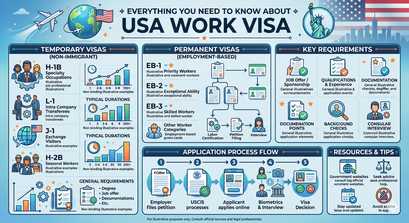
The most important route to understand is EB-3. If the caregiver-related role is permanent and the employer is willing to sponsor, the usual sequence is labor certification, immigrant petition, and then either consular processing abroad or adjustment of status if the worker is already eligible and in the United States. DOL explains that permanent labor certification is meant to ensure there are not sufficient able, willing, qualified, and available U.S. workers for the role and that hiring the foreign worker will not adversely affect the wages and working conditions of similarly employed U.S. workers.
A second pathway people sometimes mention is H-2B, but it is not the best match for most long-term caregiver jobs. USCIS describes H-2B as a route for U.S. employers or U.S. agents to bring foreign nationals to the U.S. to fill temporary nonagricultural jobs, and the employer must show a qualifying temporary need. That is why H-2B is usually discussed more for seasonal or peak-load industries than for stable, ongoing caregiving demand.
Some people also confuse caregiver work with programs like au pair arrangements or private domestic employment rules, but those are not the same thing as ordinary elder-care or agency-based home-care sponsorship. If your goal is to work legally in the U.S. in a sustained caregiver role and possibly build a long-term immigration future, employer-sponsored permanent pathways are generally the more relevant part of the conversation. That is why serious job seekers should focus less on “caregiver visa” as a phrase and more on whether the employer has a real sponsorship process, a legal team, and a history of filing labor-based cases.
Which caregiver roles are most realistic for foreigners?
The most realistic opportunities usually sit in large, structured care environments rather than random private-household ads. BLS shows that home health and personal care aides work in clients’ homes, group homes, and care communities, while nursing assistants provide basic care in healthcare settings. In practical terms, this means the most sponsorship-friendly roles are often tied to home care agencies, assisted-living communities, nursing and residential care facilities, hospice providers, and some rehabilitation or long-term care employers that hire at scale.
That does not mean private live-in caregiver roles never sponsor. It means they are often less predictable, less scalable, and less transparent than employer-backed systems. If you are serious about home care jobs with visa sponsorship in USA, your best odds usually come from organizations that already understand recruitment, payroll, compliance, and immigration paperwork. Those employers are more likely to know what sponsoring a foreign worker really involves.
There is also an important skill ladder here. Someone may start by targeting basic caregiver or aide roles, then move into CNA, medication aide, LPN/LVN, or other health-support positions depending on state rules and training. That matters because the more formal your qualifications become, the broader your employer pool often becomes. BLS reports the median annual wage for home health and personal care aides was $34,900 in May 2024, while the median annual wage for nursing assistants was $39,530. Licensed practical and vocational nurses earned a median of $62,340.
Salary expectations for caregiver jobs in USA for foreigners
Many people search this topic only because of sponsorship, but salary is just as important. For entry-level caregiver work in the U.S., pay is usually modest at the start, especially compared with more licensed healthcare roles. According to BLS, home health and personal care aides had a median annual wage of $34,900 in May 2024, with the lowest 10% earning less than $25,600 and the highest 10% earning more than $44,190. Nursing assistants had a higher median of $39,530 in May 2024.
That does not mean caregiver work is a poor option. It means you should go in with the right expectation. The real value of a legitimate sponsored caregiver role can be bigger than the starting wage alone because it may provide lawful U.S. employment, stable hours, experience in the care sector, and a path into better-paid roles later. For many foreign workers, that combination is what makes the opportunity worthwhile, especially if they plan to build a long-term career in healthcare support.
The demand picture is also encouraging. BLS projects 17% growth for home health and personal care aides from 2024 to 2034, much faster than average, and about 765,800 openings each year. Nursing assistants are projected to grow more slowly, at 2%, but they still show about 211,800 openings per year on average because the sector has constant replacement demand. In other words, the care economy is active; the real challenge is not whether jobs exist, but whether the specific employer is willing and able to sponsor.
Requirements employers usually look for
The baseline requirement for many caregiver roles is not always a university degree. BLS says home health and personal care aides typically need a high school diploma or equivalent, although some positions do not require it. For aides working in certified home health or hospice agencies, BLS says formal training and a standardized test are required. Federal regulations set that training at at least 75 hours, including classroom and supervised practical training, and require 12 hours of in-service training every 12 months for home health aides.
For nursing assistant pathways, requirements are also formalized. Federal regulations for nurse aide training programs require no less than 75 clock hours of training, though many states impose more than the federal minimum. That means if you want to widen your chances in the U.S. care market, getting recognized caregiver, HHA, or CNA-related training before you apply can strengthen your file even when the exact state licensing process will happen later.
Beyond credentials, employers care about practical ability. They want people who can communicate clearly, follow care plans, handle elderly or disabled clients respectfully, document basic information, observe changes in condition, work shifts, and remain calm under pressure. The federal home health aide standards themselves emphasize communication, observation, infection prevention, emergency awareness, personal hygiene assistance, safe transfer techniques, nutrition, and reporting changes in patient condition. So even if a posting looks “entry level,” the role is still serious and skill-based.
How to apply for caregiver jobs with visa sponsorship in USA
The best way to approach this search is systematically. First, build a CV that matches U.S. care language. Use job titles that American employers recognize: caregiver, home health aide, personal care assistant, nursing assistant, CNA trainee, hospice aide, direct support professional. Then describe your real duties in plain terms: bathing assistance, mobility support, meal preparation, medication reminders, companionship, recordkeeping, dementia care, end-of-life support, and shift work. If you have CPR, first aid, elder-care, disability-support, or nursing-assistant training, put that near the top.
Second, search for employers, not just vacancies. A vacancy may look attractive, but a sponsorship-capable employer is what matters. Look for organizations with multiple branches, formal HR teams, long-term care operations, or healthcare staffing infrastructure. The reason is procedural: DOL states the filing responsibility in PERM belongs to the employer, and the employer must be ready to carry the case through certification and onward to USCIS. A casual small ad posted by an individual family may not have that capacity even if the job itself is real.
Third, ask precise questions early. Do not ask only, “Do you sponsor visa?” Ask whether the employer has sponsored EB-3 or other employment-based cases before, whether the role is permanent full-time, whether there is an internal immigration team or outside counsel, and whether they understand the timeline. Those questions immediately separate serious employers from vague recruiters.
Fourth, keep your documents ready. In many cases that means passport, education records, training certificates, work reference letters, police clearance if later required, and employment history. If your experience was informal, such as private caregiving for a relative or client, try to document it properly through letters, dates, duties, and supervisor references. Formal proof matters because sponsored cases become evidence-heavy.
How long does the process take?
This is where many applicants get discouraged. Legitimate sponsorship for caregiver jobs in the USA is rarely fast. DOL labor certification, USCIS petition processing, document collection, visa-number availability, and consular scheduling can each add time. The State Department’s Visa Bulletin shows that these categories move according to visa availability, and some categories are backlogged rather than current. As of April 2026, the “Other Workers” line was behind the standard EB-3 line for many applicants, which is a practical reminder that your timeline may be measured in many months or longer, not a few weeks.
That does not mean you should avoid the route. It means your strategy should be realistic. If you need an immediate move, caregiver sponsorship may not solve that quickly. If you want a lawful, structured path and are willing to be patient, the route may still be very useful. The wrong expectation is “I found a caregiver job today, so I will enter the U.S. next month.” The better expectation is “If I find a serious employer, I may be starting a process.”
Where to find caregiver jobs in USA with sponsorship
Your search should combine job boards, employer career pages, healthcare recruitment agencies, long-term care company websites, and professional networking. But the real skill is filtering for seriousness. Many good candidates waste time applying to every ad with the word “caregiver.” A better method is to search combinations like caregiver visa sponsorship USA, home health aide EB-3 sponsorship, nursing assistant sponsorship USA, long-term care foreign workers, and assisted living employer sponsorship and then investigate the employer behind the posting.
When you review a listing, look for signals of legitimacy. Is the employer a licensed care agency or facility? Do they describe full-time permanent work? Do they mention training standards, patient populations, and structured onboarding? Do they have multiple locations, a history, and a professional website? If the company looks real but the sponsorship language is vague, it may still be worth applying and asking directly. Many employers do not advertise sponsorship clearly, but some will consider it for the right candidate.
At the same time, do not ignore adjacent roles. Some foreigners enter the sector through nursing-assistant or home-health-aide tracks because the job titles are more standardized than “caregiver.” Since nursing assistants and home health aides are both established BLS occupations with strong employer demand, those titles can sometimes open better search results than generic caregiver language.
How to make your application stronger
If you want to stand out, act like a serious care professional, not just someone looking for relocation. Employers sponsor people who look employable, stable, and prepared. Your CV should show reliability, compassion, physical stamina, communication skills, and comfort with vulnerable populations. Your cover letter should explain why you want to work in care, what populations you have served, and why you can succeed in a structured care environment in the United States.
Experience with the elderly, patients with mobility limitations, dementia care, hospice support, disability services, or rehabilitation support can all be powerful. So can shift-work experience, teamwork with nurses or supervisors, and proper documentation habits. If you have any certifications in first aid, CPR, manual handling, infection control, or patient support, highlight them. The federal training standards for home health aides emphasize many of those same competencies, so showing them upfront helps your credibility.
Language also matters. Use American-style resume phrasing where appropriate: “assisted clients with activities of daily living,” “supported ambulation and safe transfers,” “monitored and reported changes in condition,” “maintained accurate daily care records,” and “provided companionship and emotional support.” That language mirrors how U.S. care employers describe the work.
Scam warning: how to avoid fake visa sponsorship offers
This area attracts scams because desperation is high and immigration is complicated. USCIS warns the public about immigration scams and specifically warns people to beware of suspicious job offers. DOL rules are also clear that, in the PERM context, employers must pay the costs of preparing, filing, and obtaining labor certification, and transferring those employer costs to the worker is prohibited.
That means you should be careful with any recruiter or “agent” who tells you to pay large sums upfront for guaranteed caregiver sponsorship. A legitimate process may involve your own separate expenses at some stages, but a supposed employer demanding payment for its labor-certification obligations is a major red flag. The same is true for offers with no interview, no written job duties, fake urgency, poor company information, or claims that a visa can be approved in a few days.
A simple rule helps here: if the opportunity sounds easier than U.S. immigration normally is, slow down and verify everything. Check the employer, verify licenses where applicable, ask for the legal basis of sponsorship, request written details, and never assume that a “visa sponsorship available” line in a social media post is enough evidence on its own.
Why this keyword has strong traffic and monetization potential
From an SEO standpoint, caregiver jobs with visa sponsorship in USA is a powerful keyword because it combines four strong intents in one phrase: job intent, immigration intent, country intent, and commercial/decision-making intent. A user searching this is not casually browsing. They usually want one of three things: a way to relocate, a way to work legally, or a faster path to a stable employer. That makes adjacent keyword clusters valuable too, such as caregiver jobs in USA for foreigners, home care jobs with sponsorship, nursing assistant jobs with visa sponsorship, EB-3 visa jobs USA, and healthcare assistant jobs in America.
A strong pillar post should therefore do more than repeat the main keyword. It should satisfy the full search journey: what the role is, whether sponsorship is real, what visa route applies, how much it pays, what training is needed, how to apply, and how to avoid scams. That is exactly what makes this type of article rankable and monetizable. It captures informational traffic, but it also naturally supports lead magnets, resume services, immigration consultation referrals, training-course affiliates, and job-search tool monetization.
Frequently asked questions
Can foreigners get caregiver jobs with visa sponsorship in USA?
Yes, but usually through an employer-led immigration process rather than a special “caregiver visa.” For many lower-training roles, the relevant pathway is often EB-3 “other workers,” subject to labor certification, petition approval, and visa-number availability.
Is there a caregiver visa for the USA?
No. There is no standalone visa category officially called a caregiver visa. Real cases are usually built under broader employment-based immigration rules.
How much do caregivers earn in the U.S.?
BLS reports that home health and personal care aides had a median annual wage of $34,900 in May 2024, while nursing assistants had a median annual wage of $39,530.
Do I need formal training?
Sometimes yes. BLS says some home-care jobs may not require much formal education, but workers in certified home health or hospice agencies must complete formal training and pass a standardized test. Federal rules set home health aide training at at least 75 hours and require ongoing in-service training.
Can H-2B be used for caregiver jobs?
Only in limited situations where the employer can prove a qualifying temporary nonagricultural need. It is not the standard long-term route for ordinary caregiver sponsorship.
Can my spouse and children come with me?
For employment-based immigrant visa pathways, the State Department says certain spouses and children may accompany or follow to join the principal applicant.
Final thoughts
The truth about caregiver jobs with visa sponsorship in USA is encouraging, but it is not simplistic. Yes, real opportunities exist. Yes, the U.S. care sector is large and still growing. Yes, some employers do sponsor foreign workers. But the winning strategy is not chasing fantasy “guaranteed caregiver visa” promises. The winning strategy is understanding the real legal route, targeting genuine employers, documenting your experience properly, and presenting yourself as a strong care professional.
If you build your search around that reality, you will already be ahead of most applicants. You will search better, apply better, avoid more scams, and give yourself a real chance at finding a legitimate caregiver opportunity in the United States.