If you are a foreign professional trying to build a career in the United States, the smartest strategy is not to chase every opening that says “now hiring.” It is to focus on occupations where three things already line up: real labour demand, salaries high enough to justify sponsorship costs, and visa pathways employers actually use. In 2026, that overlap is strongest in healthcare, computer and information technology, certain engineering roles, and selected business and research tracks. The U.S. Bureau of Labor Statistics projects total U.S. employment to grow by 5.2 million jobs from 2024 to 2034, with healthcare and social assistance expected to post the largest job growth and fastest sector growth. Computer and information technology occupations are also projected to grow much faster than the average for all occupations, with about 317,700 openings per year.
That matters because visa sponsorship is expensive, technical, and time-sensitive. Employers usually sponsor when the role is hard to fill locally, requires a specific academic or professional background, or directly supports revenue, compliance, patient care, research, or critical systems. In other words, the best U.S. jobs for foreign professionals are rarely random. They cluster around occupations where the employer can clearly justify the hire and where the candidate’s degree, licence, or specialist experience fits the immigration category. USCIS states that H-1B jobs must be specialty occupations tied to at least a bachelor’s degree or higher in a specific specialty, while EB-2 and EB-3 routes cover advanced-degree professionals, skilled workers, and other eligible workers, often through employer-backed petitions.
This guide breaks down the most realistic high-demand USA jobs with visa sponsorship for foreign professionals, the best visa pathways for each category, what current U.S. labour data says about growth and pay, and how to position yourself for serious sponsorship rather than dead-end applications. It also explains a key point many job seekers miss: not every U.S. work route depends on traditional employer sponsorship. Some highly qualified professionals may qualify for cap-exempt roles, extraordinary-ability classifications, or national-interest pathways.
How visa sponsorship works for foreign professionals in the USA
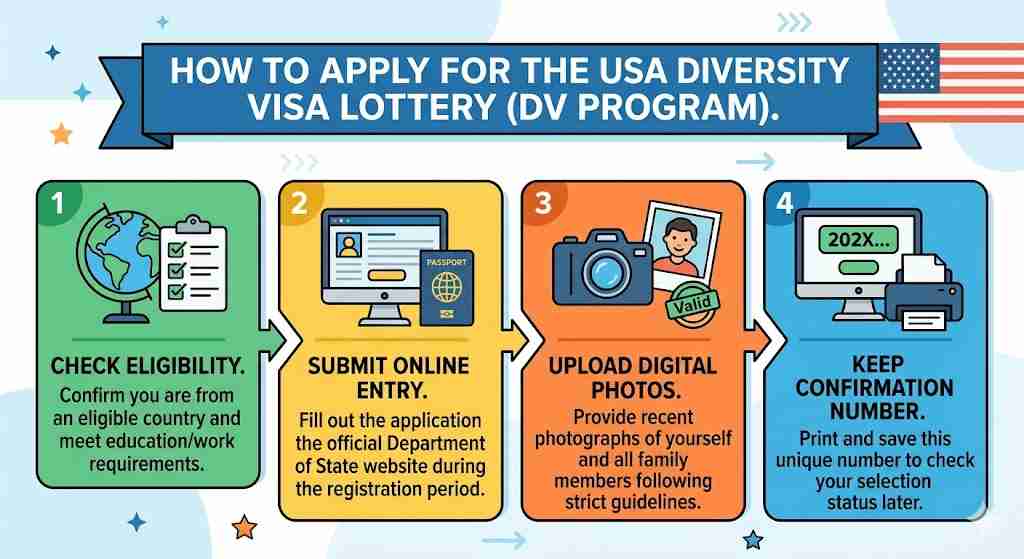
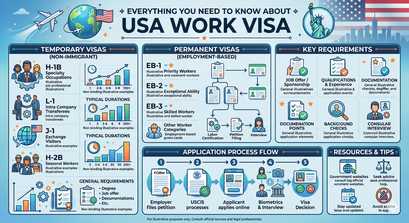
In practice, most foreign professionals enter the U.S. labour market through one of a few repeatable tracks. The best-known temporary route is the H-1B visa, which USCIS describes as a classification for specialty occupations and notes is subject to an annual cap of 65,000 new visas, with an additional 20,000 available under the U.S. advanced degree exemption. USCIS also notes that certain petitions are cap-exempt, including some filed by nonprofit research organizations and government research organizations. For many professionals, that makes the difference between a lottery-based path and a more strategic employer search.
On the permanent side, the two most relevant employment green card tracks for foreign professionals are usually EB-2 and EB-3. USCIS states that EB-2 covers members of the professions holding advanced degrees or persons of exceptional ability, while EB-3 covers skilled workers, professionals, and other workers. The Department of Labor explains that, in most instances, an employer must first obtain a permanent labor certification before filing the immigrant petition with USCIS. That is why employer-backed green card hiring usually takes planning, budget, and patience.
There are also important exceptions. The State Department says certain extraordinary-ability applicants in the first-preference employment category may self-petition, and EB-2 applicants may seek a National Interest Waiver, which can waive the job offer and labor certification if the case serves the national interest. USCIS also maintains dedicated guidance for physicians pursuing a National Interest Waiver when they agree to work in designated underserved areas for a required period. For elite researchers, founders, academics, doctors, and top technical specialists, these exceptions can be more strategic than waiting for conventional sponsorship.
One more reality check matters here. Sponsorship is not always fast. The Department of Labor’s FLAG processing page reported average PERM analyst-review processing times of 501 calendar days in March 2026, with audit review averaging 343 days. That does not mean every case takes that long, but it does mean foreign professionals should target employers with experience, internal immigration counsel, or a proven track record of international hiring.
The best high-demand USA jobs with visa sponsorship for foreign professionals
1) Software developers
Software development remains one of the strongest sponsorship categories because it combines high demand, strong salaries, and a clean fit with specialty-occupation visa logic. BLS reports that software developers had a median annual wage of $133,080 in May 2024, and overall employment for software developers, quality assurance analysts, and testers is projected to grow 15 percent from 2024 to 2034, with about 129,200 openings each year. BLS also links future demand to AI, IoT, robotics, automation, EV-related systems, and security software, which makes this category especially valuable for applicants with backend, distributed systems, cloud, AI product, mobile, DevOps, or security-heavy portfolios.
For immigration purposes, software developer roles are often strong H-1B candidates because USCIS ties H-1B eligibility to specialty occupations requiring a bachelor’s degree or higher in a specific specialty. They can also feed into EB-2 or EB-3 later if the employer wants to retain the worker long-term. Foreign professionals with computer science, software engineering, information systems, or related degrees usually compete best when they can show direct alignment between their degree and the job title, not just a long list of coding tools.
2) Data scientists
Data science is one of the clearest “high-demand + high-pay + sponsorable” occupations in the U.S. market. BLS reports that data scientists earned a median annual wage of $112,590 in May 2024 and that employment is projected to grow 34 percent from 2024 to 2034, with about 23,400 openings each year. BLS also shows strong pay in computer systems design, management, research, consulting, and insurance-related settings, which means data scientists are not limited to pure tech firms. They are valuable across finance, healthcare, logistics, research, marketing, and enterprise analytics.
This occupation works well for foreign professionals because it is degree-linked, analytically specialized, and commercially valuable. Employers can often justify sponsorship more easily for candidates with advanced statistics, machine learning, econometrics, applied mathematics, computer science, or AI backgrounds than for broad “general analyst” candidates. Data science can fit H-1B for temporary employment and EB-2 or EB-3 for longer-term retention, while exceptionally strong candidates with nationally important research or innovation records may sometimes explore NIW-type strategies.
3) Information security analysts
Cybersecurity is one of the strongest U.S. sponsorship lanes because companies cannot afford serious security gaps and the work is highly specialized. BLS reports that information security analysts earned a median annual wage of $124,910 in May 2024, and employment is projected to grow 29 percent from 2024 to 2034, with about 16,000 openings per year. That is a powerful combination of pay and growth.
For foreign professionals, security roles become even more attractive when paired with cloud security, application security, incident response, identity and access management, threat hunting, compliance engineering, or security architecture. These are jobs where employers often feel the shortage directly. They also fit the H-1B degree-specialty logic cleanly, especially when the role requires formal education in cybersecurity, computer science, information assurance, or a closely related field. Over time, these roles can also support EB-2 or EB-3 sponsorship if the employer wants a permanent retention path.
4) Computer and information research scientists
This is one of the best U.S. categories for highly qualified foreign professionals in AI, advanced computing, research engineering, and innovation-heavy technical work. BLS reports that computer and information research scientists earned a median annual wage of $140,910 in May 2024, and employment is projected to grow 20 percent from 2024 to 2034, with about 3,200 openings per year. BLS also notes that a master’s degree is typically required for entry, which makes the role especially attractive for advanced-degree holders.
This occupation is especially important because it overlaps with some of the more flexible immigration routes. USCIS notes that H-1B cap exemptions may apply to certain research organizations, while O-1 remains available to individuals with extraordinary ability in science, education, business, athletics, or the arts. In plain terms, strong research scientists and AI specialists may have more than one pathway available, especially if they have publications, patents, conference visibility, high-impact work, or research-lab experience.
5) Registered nurses
Healthcare remains the single strongest broad sector for international job seekers, and registered nursing is one of the most practical entry points. BLS reports that registered nurses earned a median annual wage of $93,600 in May 2024, with employment projected to grow 5 percent from 2024 to 2034 and about 189,100 openings each year. That volume matters. Even where growth percentages are modest, the absolute number of openings is large, which often matters more for job seekers than headline percentages alone.
Nursing also stands out because USCIS and DOL recognize a special labour-market treatment for this area. USCIS notes that Schedule A currently includes professional nurses and physical therapists as Group I occupations, and USCIS also maintains health care worker certification guidance for workers looking to serve as registered nurses and certain other health professionals. That does not make immigration automatic, but it does mean registered nursing sits in one of the more established professional immigration channels.
For foreign nurses, the real differentiators are licensure readiness, NCLEX planning, credential evaluation, English-language readiness where required, and willingness to work in the states or hospital systems that actively recruit internationally. From a commercial-intent SEO angle, this is why “nursing jobs in USA with visa sponsorship” remains such a powerful topic: the demand is real, the pathway is known, and hospitals can actually use it.
6) Nurse practitioners and advanced practice nursing roles
If you already have advanced nursing credentials, the U.S. market becomes even more attractive. BLS reports that nurse anesthetists, nurse midwives, and nurse practitioners earned a median annual wage of $132,050 in May 2024, and overall employment for the group is projected to grow 35 percent from 2024 to 2034, with about 32,700 openings each year. BLS also lists nurse practitioners among the fastest-growing occupations in the country.
For foreign professionals, these roles are powerful because they combine high earnings, fast growth, and strong healthcare demand. The challenge is that they also require advanced education, licensing, and state-specific regulatory fit. For applicants who can meet those standards, however, advanced nursing is one of the clearest premium sponsorship targets in the U.S. labour market.
7) Physical therapists
Physical therapy remains one of the best healthcare sponsorship categories outside nursing. BLS reports that physical therapists earned a median annual wage of $101,020 in May 2024, and employment is projected to grow 11 percent from 2024 to 2034, with about 13,200 openings each year.
The immigration angle is especially important here. DOL and USCIS both identify physical therapists as Schedule A Group I occupations, alongside professional nurses. That means employers hiring qualified foreign physical therapists operate in a more established sponsorship environment than employers in many other professional categories. For foreign PTs, the real issue is not whether the occupation is viable. It is whether the candidate has the licensing readiness, credential documentation, and employer support required to move efficiently.
8) Industrial engineers and related engineering roles
Engineering remains one of the strongest H-1B-style sponsorship clusters because it maps neatly to degree-specific work. Among engineering occupations, industrial engineering looks particularly attractive in current BLS data. BLS reports that industrial engineers earned a median annual wage of $101,140 in May 2024 and that employment is projected to grow 11 percent from 2024 to 2034, with about 25,200 openings each year. BLS also noted in 2026 reporting that industrial engineers and mechanical engineers are among the faster-growing engineering occupations over the decade.
This matters because engineering jobs often give employers a straightforward case for sponsorship: the role is technical, the degree requirement is explicit, and the business value is direct. Foreign engineers in manufacturing, operations, supply chain optimisation, process design, quality systems, automation, and industrial transformation tend to perform best when their resumes are written around measurable systems impact rather than generic engineering language. Immigration-wise, these roles usually fit H-1B first and EB-2 or EB-3 later depending on seniority, degree level, and employer strategy.
9) Medical and health services managers
Not every sponsorable healthcare role is clinical. BLS reports that medical and health services managers earned a median annual wage of $117,960 in May 2024, and employment is projected to grow 23 percent from 2024 to 2034, with about 62,100 openings each year. These professionals plan, direct, and coordinate medical and health services, often managing facilities, clinical areas, or group practices.
This is a strong category for foreign professionals who combine healthcare knowledge with operations, administration, digital transformation, compliance, analytics, quality improvement, or health informatics. Sponsorship is typically stronger when the role is clearly specialised and when the candidate has an advanced degree or hard-to-find domain experience. It is usually more competitive than nursing or software development, but it is not a niche category anymore. The growth rate says otherwise.
10) Accountants and auditors
Accounting is not always the first category people mention when discussing U.S. sponsorship, but it remains relevant, especially in multinational firms, public accounting, advisory, audit, tax, and high-compliance environments. BLS reports that accountants and auditors earned a median annual wage of $81,680 in May 2024, with projected employment growth of 5 percent from 2024 to 2034 and about 124,200 openings each year. BLS also says overall employment in business and financial occupations is projected to grow faster than average, with about 942,500 openings each year across the category.
For foreign professionals, this is a more selective sponsorship lane than tech or nursing, but still viable. Employers are more likely to sponsor when the candidate offers specialised accounting, international tax, audit, financial reporting, ERP, internal controls, or regulated-industry experience. A degree-aligned accounting role can fit the H-1B framework, and long-term retention may later move through EB-2 or EB-3 depending on the case.
11) Physicians and surgeons
Medicine remains one of the highest-value professions in the U.S. labour market. BLS reports that physicians and surgeons have median wages equal to or greater than $239,200 per year, with about 23,600 openings annually projected over the 2024 to 2034 decade. The overall growth rate is 3 percent, which is not as fast as some other healthcare roles, but the profession remains strategically important because of pay, shortage areas, and public-interest pathways.
For foreign physicians, the story is not just about ordinary employer sponsorship. USCIS specifically notes that physicians may receive a National Interest Waiver when they agree to work full-time in clinical practice in designated underserved areas for the required period. That makes medicine one of the clearest examples of a field where U.S. immigration policy can align with public service needs. For the right candidate, that is a major strategic advantage.
Which U.S. jobs are best for sponsorship in 2026?
If the goal is probability, not just prestige, the best targets right now are software development, data science, cybersecurity, registered nursing, advanced practice nursing, physical therapy, and selected engineering roles. These occupations combine strong labour demand with clear qualification standards and visa compatibility. Healthcare also benefits from sector-level momentum: BLS says healthcare and social assistance is projected to be the fastest-growing major industry sector and add the most jobs from 2024 to 2034.
If the goal is flexibility, then top-tier researchers, founders, academics, and physicians may have additional options beyond standard employer sponsorship. USCIS and the State Department both point to extraordinary-ability and national-interest pathways for certain cases, and TN status remains relevant for qualified Canadian and Mexican professionals in listed occupations. That means “visa sponsorship jobs in USA” is not always the full story. For some professionals, the smarter question is whether they need classic sponsorship at all.
How to improve your chances of getting a USA job with visa sponsorship
First, apply where sponsorship logic already exists. A hospital system hiring registered nurses, a cybersecurity firm hiring cloud security analysts, or a software company building AI products is far more likely to sponsor than a small employer filling a loosely defined generalist role. The BLS projections make this clear: healthcare occupations, computer and information technology occupations, and several advanced technical roles are expanding faster than average, with large annual opening volumes.
Second, match your degree to the job title exactly where possible. USCIS is explicit that H-1B specialty-occupation eligibility turns on degree alignment with the occupation. A foreign professional with a bachelor’s or higher degree in the relevant specialty is easier to place in a sponsorable role than someone whose education and experience are broad but not clearly linked to the opening.
Third, prefer roles with measurable skill scarcity. Generic “computer programmer” targeting is weaker than software developer, platform engineer, data scientist, or information security analyst targeting. That is not just branding. BLS projects employment for computer programmers to decline 6 percent from 2024 to 2034, while software developers, data scientists, and information security analysts all show much stronger outlooks. Job seekers who optimise their positioning around growing occupations usually do better than those who rely on outdated titles.
Fourth, be honest about timeline. Temporary work sponsorship and permanent sponsorship are not the same thing. DOL says permanent labor certification is often required before an employer can file an immigrant petition, and current PERM averages remain lengthy. That means the best employers for foreign professionals are often those that already understand the process and have sponsored before.
Final thoughts
The U.S. job market is still one of the most attractive in the world for foreign professionals, but success comes from targeting the right occupation, not just the right country. In 2026, the best sponsorship opportunities sit where labour demand, salary strength, and visa eligibility all intersect. That is why software developers, data scientists, cybersecurity specialists, registered nurses, nurse practitioners, physical therapists, engineers, healthcare managers, accountants, and physicians remain the most important categories to watch.
The strongest strategy is simple: focus on occupations with real projected demand, tailor your resume to degree-specific and licence-specific requirements, target employers that already hire internationally, and choose the visa lane that fits your profile instead of forcing yourself into the wrong one. The professionals who win in this market are usually not the ones applying everywhere. They are the ones applying precisely.
FAQ: High-demand USA jobs with visa sponsorship for foreign professionals
Which U.S. jobs sponsor visas most often for foreign professionals?
The strongest categories are usually healthcare and advanced tech roles, especially registered nurses, nurse practitioners, physical therapists, software developers, data scientists, information security analysts, and selected engineering jobs because these occupations combine strong demand with degree- or licence-specific requirements.
What is the main visa for foreign professionals in the USA?
For temporary professional work, the H-1B is the main route, and USCIS says it covers specialty occupations that generally require a bachelor’s or higher degree in a specific specialty. For permanent immigration, EB-2 and EB-3 are the main employment-based categories for many professionals.
Can I get a USA job with sponsorship without a master’s degree?
Yes. Many sponsorable professions, including software development, registered nursing, accounting, industrial engineering, and cybersecurity, are normally entered with a bachelor’s degree, although licensing, experience, or certifications may still matter.
Are nurses and physical therapists easier to sponsor than many other professions?
In many cases, yes, because USCIS and DOL identify professional nurses and physical therapists as Schedule A Group I occupations, which gives these professions a more established immigration framework than many others.
How long does employment-based sponsorship take?
It varies by route and case, but the Department of Labor reported average PERM processing times of 501 calendar days for analyst review in March 2026, which is why experienced sponsoring employers matter so much.